The Hidden Link Between Your Hayfever, Your Gut and Your Hormones
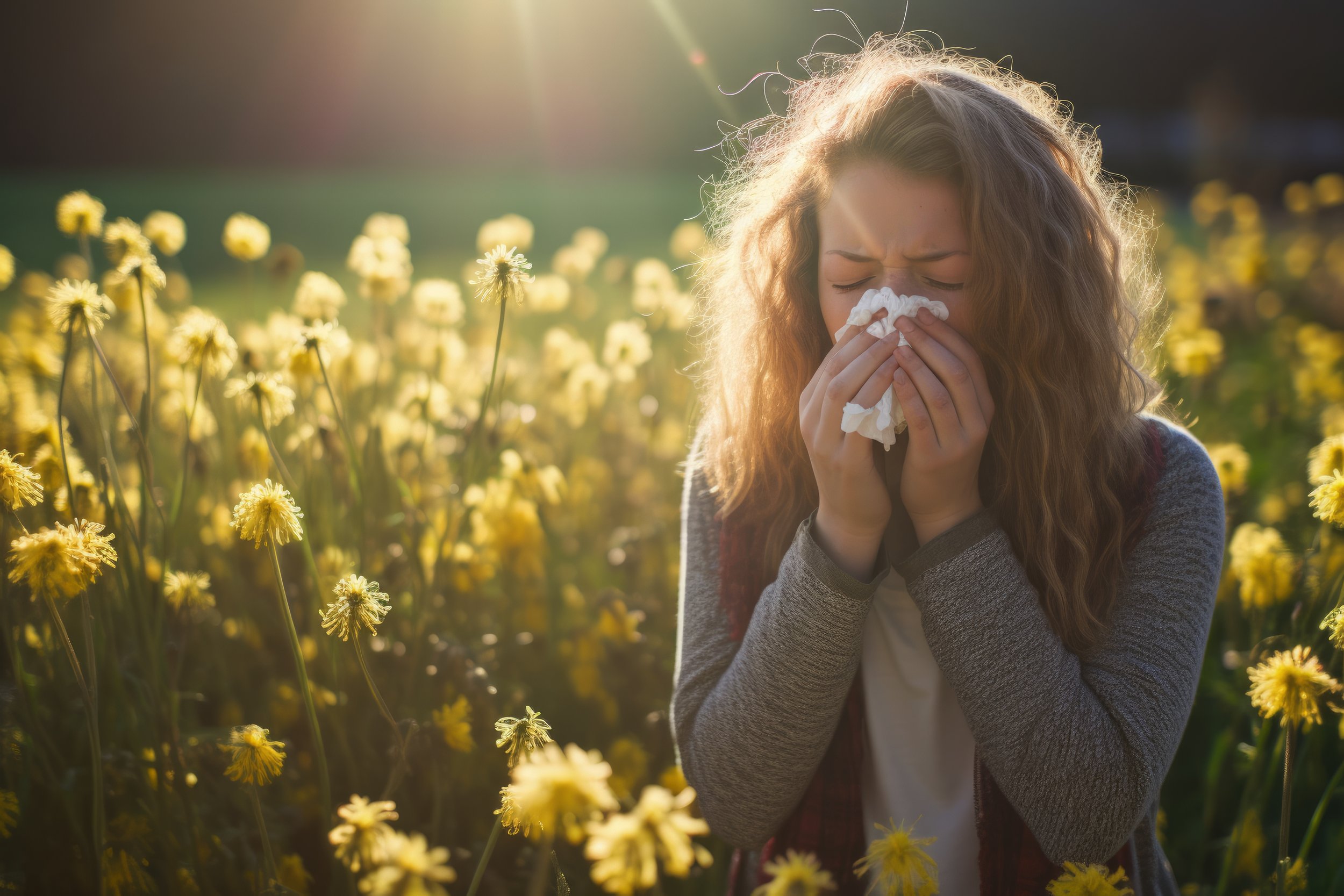
Do you suffer from hay fever, gut problems and hormonal issues?
If you have spent years managing your symptoms separately with antihistamines for the hayfever, probiotics for the gut, painkillers for your periods and still find yourself struggling? There could be a missing link that not many people know about.
Typical symptoms treated separately
These three symptoms are commonly dismissed combinations in women's health. They tend to get treated individually, because that is how most medications work. One symptom with one solution at the pharmacy. What’s often missed, is the thread that connects them.
The Symptom Picture
Think of Histamine like a bucket. We produce it ourselves and can manage a certain load within the bucket. However, when we are exposed to too much histamine and/or can’t break it down efficiently, the bucket overflows. Enter new symptoms below.
Histamine-related presentations can look quite different from person to person. Some of the patterns that come up most often include:
Seasonal hayfever or year-round nasal congestion
Loose stools or urgency, particularly after eating
Heavy, painful or clotty periods
Skin rashes, flushing or itching with no clear cause
Fatigue that seems disproportionate to how much you have slept
Waking in the early hours feeling anxious or wired
Symptoms that worsen in the week before a period
The list of symptoms are wide, which is part of why histamine is often missed.
What These Symptoms Have in Common (the technical bit)
Histamine is a chemical your immune system produces as part of its normal response to perceived threats. It is also found in certain foods and produced by some gut bacteria. In the right amounts, it performs useful functions. When it builds up consistently, it creates a much broader set of problems than most people associate with it.
The hayfever piece is fairly well known - histamine reacting to pollen, triggering the classic sneezing and itching response. The gut piece is less commonly discussed. High-histamine foods could irritate the gut lining directly, contributing to loose stools, urgency and unpredictable digestion. Research published in Nutrients in 2022 found that people with histamine intolerance symptoms showed significantly higher levels of histamine-producing bacteria in the gut, alongside reduced microbial diversity and markers of gut lining disruption compared to healthy controls.
The period piece is where it gets particularly interesting from a clinical perspective. Oestrogen and histamine have a feedback relationship. Mast cells - the immune cells that store and release histamine - carry oestrogen receptors, and oestrogen signals them to release histamine. Histamine in turn signals the ovaries to produce more oestrogen, keeping the loop running. A 2026 review published in Frontiers in Allergy confirmed that fluctuating oestrogen and progesterone modulate mast cell activity and contribute to distinct histamine-related and allergic phenotypes in women. When this loop continues, both oestrogen and histamine tend to rise together. The result could be heavier periods, worsening premenstrual symptoms, and a monthly pattern of feeling significantly worse.
We have three different symptoms with one underlying driver.
In Her Own Words - Client Story
“For over 35 years, I suffered from chronic hayfever, including gut issues, attempting countless treatments with little relief. Sofia's approach was a game-changer. Her plan not only alleviated my symptoms but also significantly improved my overall well-being. I am now able to enjoy life without this constant burden."
- Charlene, UK
What Could Help You Get Clearer
The most useful first step is reducing the highest-histamine foods for a few weeks. This alone could give you useful information about how much histamine load is contributing to your symptoms.
Functional testing is available for those who want a deeper picture, but it tends to work best as a second step once dietary changes have been tried consistently. Two options worth exploring with a practitioner are a comprehensive stool test, which could indicate whether histamine-producing bacteria are elevated and whether the gut lining might be a contributing factor, and the Histamine Nutrigenomics report, which looks at the genes involved in histamine breakdown (DAO which primarily clears histamine in the gut, and HNMT, which handles histamine in the nervous system and lungs). Nutrigenomics shows genetic predisposition rather than current enzyme activity, a different layer of information. Neither test is necessary to make a start, and results are always more useful when interpreted alongside a full case history.
Three Practical First Steps Worth Considering
1. Reduce the highest-histamine foods for two to three weeks. Aged cheese, wine, cured and fermented meats, vinegar-based condiments, smoked fish, and histamine-rich fresh foods including tomatoes, spinach, avocado, aubergine and strawberries. A short reduction period could help clarify how much food is contributing to your symptoms.
2. Prioritise freshly prepared meals where possible. Histamine continues to develop in food as it sits - leftovers, processed foods and anything stored for several days tend to carry a higher load. Freezing leftovers promptly rather than refrigerating them could make a noticeable difference.
3. Support oestrogen clearance through the basics. Regular, complete bowel movements are one of the primary ways the body clears used oestrogen. Adequate fibre, hydration and daily movement all support this. If constipation is part of the picture, it is worth addressing before anything else.
Ready to Look at the Full Picture?
If you recognise yourself in what you have read here, and you are tired of managing symptoms one at a time, I would be glad to hear from you. Working through the underlying patterns of gut function, histamine load, and hormone clearance tends to make more difference than any single intervention on its own.
You are welcome to book a free initial call to talk through your symptoms and find out whether working together could be a good fit.

Need some support or guidance?
If you're tired of struggling with health issues on your own, schedule a free 15 minute consultation below to discuss your options.
References:
1. Sanchez-Perez S, et al.. Intestinal Dysbiosis in Patients with Histamine Intolerance. Nutrients. 2022;14(9):1774. Available at: https://www.ncbi.nlm.nih.gov/pmc/articles/PMC9102523/
2. Mou Z, et al.. The taxonomic distribution of histamine-secreting bacteria in the human gut microbiome. BMC Genomics. 2021;22(1):695. Available at: https://www.ncbi.nlm.nih.gov/pmc/articles/PMC8465708/
3. Valerieva A, et al.. Women hormones and hypersensitivity: allergic diseases in menopause. Frontiers in Allergy. 2026;7:1777688. Available at: https://www.frontiersin.org/journals/allergy/articles/10.3389/falgy.2026.1777688/full
4. Wood S.. Histamine intolerance and the influence of bowel microbiome. Journal of Microbiology and Experimentation. 2025;13(1):27-28. Available at: https://medcraveonline.com/JMEN/histamine-intolerance-and-the-influence-of-bowel-microbiome-an-editorial.html
5. Lifecode Gx.. Histamine Intolerance Report. lifecodegx.com. Available at: https://www.lifecodegx.com/histamine-intolerance-report